Machine Learning Model Monitoring: Ensuring Continued Performance in Production
Learn essential strategies for monitoring ML models in production to detect drift, maintain accuracy, and ensure business value over time.
Deploying a machine learning model to production is just the beginning of its lifecycle. Unlike traditional software, ML models can degrade over time due to data drift, concept drift, and changing business environments. Without proper monitoring, even the most sophisticated models can silently fail, leading to poor business decisions and lost revenue.
Understanding Model Drift
Model drift occurs when the statistical properties of the target variable or input features change over time. This can happen due to seasonal variations, market changes, or shifts in user behavior. Data drift affects the input features, while concept drift affects the relationship between inputs and outputs.
- Data Drift: Changes in the distribution of input features
- Concept Drift: Changes in the relationship between features and target
- Prediction Drift: Changes in the model's prediction distribution
- Label Drift: Changes in the ground truth distribution
Key Monitoring Metrics
Effective model monitoring requires tracking multiple types of metrics across different time horizons. Performance metrics measure how well the model is achieving business objectives, while operational metrics ensure the model infrastructure is functioning correctly.
Statistical metrics help detect drift by comparing current data distributions with training data or baseline periods. Business metrics connect model performance to actual business outcomes.
A model is only as good as its ability to maintain performance over time. Without monitoring, you're flying blind.
Implementing Monitoring Systems
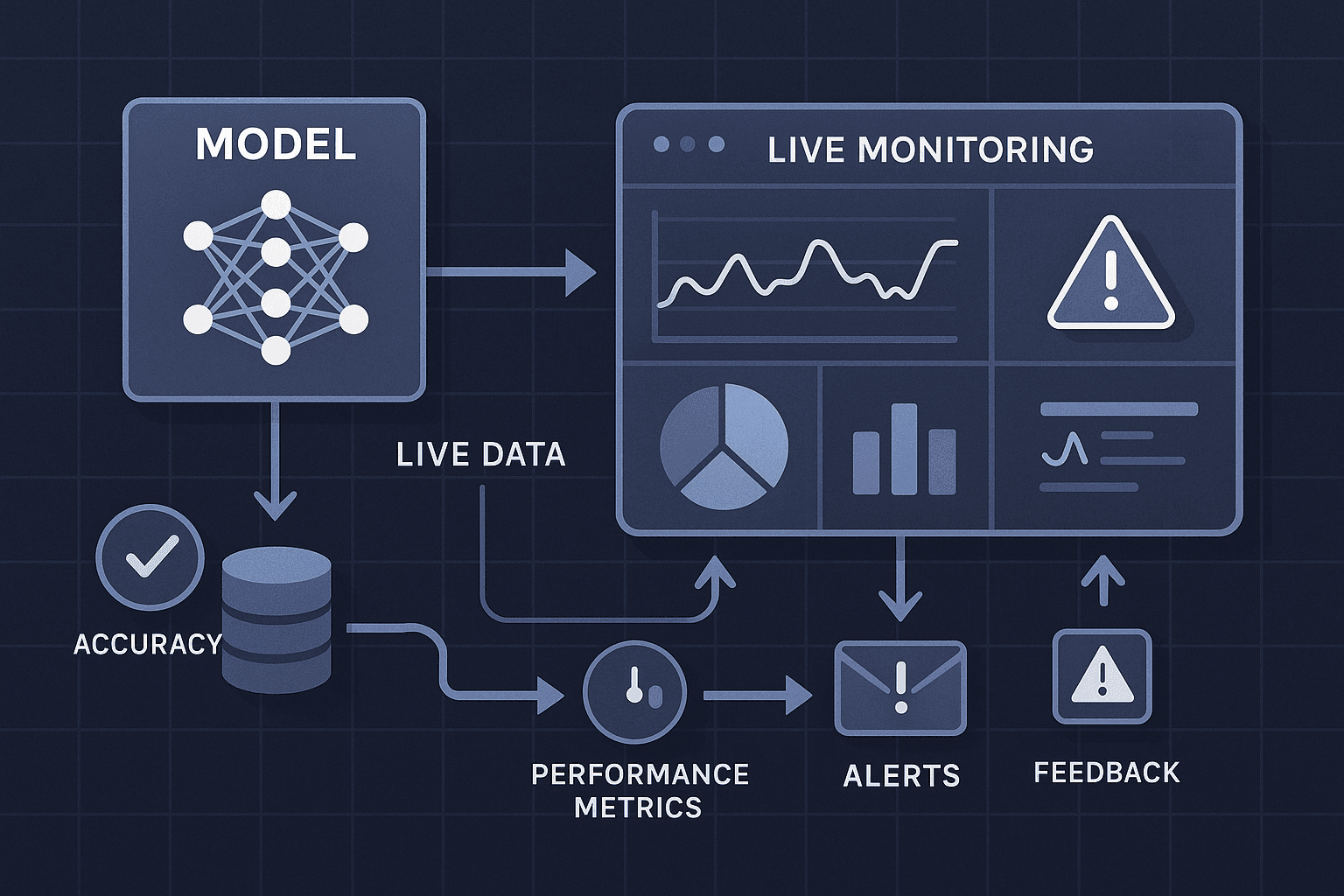
Building an effective monitoring system requires careful consideration of what to monitor, how frequently to check, and what actions to take when issues are detected. Automated alerting systems can help teams respond quickly to model degradation.
- Set up automated data quality checks
- Implement statistical drift detection algorithms
- Create dashboards for real-time monitoring
- Establish alert thresholds and escalation procedures
- Build feedback loops for continuous model improvement
Regular model retraining schedules, A/B testing frameworks, and champion-challenger model deployments are essential components of a robust MLOps pipeline that ensures models continue to deliver value over time.
Put this into practice
Get a free AI audit for your business
A 30-minute call with an engineer to find the first automation worth building.

.png)